AI SOC Agents: An Evaluation Guide for Regulated Environments
Mike Dupuis
Marketing, Crogl
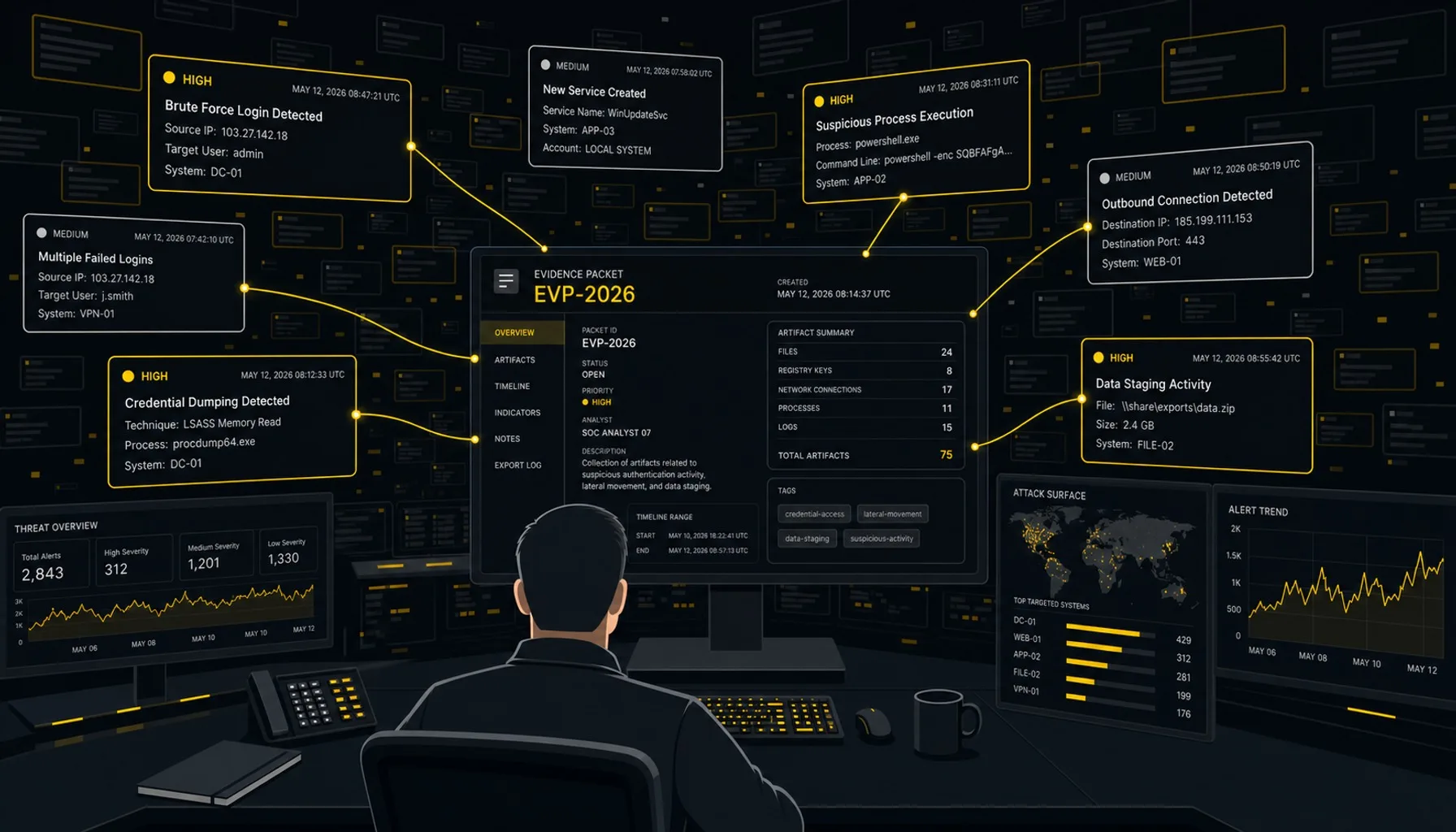 Judge an AI SOC agent by the evidence it hands your analyst.
Key Takeaways
- An AI SOC agent investigates alerts nobody wrote a workflow for and documents every step.
- The best architecture queries data sources in their native formats, avoiding the integration burden and data loss of schema normalization.
- For regulated environments, demand sovereign deployment options: on-prem, air-gapped, and bring-your-own-model to keep data and inference within your boundary.
- Evaluate agents on investigation coverage rate and audit trail completeness, not triage speed. Closing an alert without evidence is not an improvement.
- Before a POC, ask every vendor where the model runs, where logs land, and what happens when a source can’t be queried.
- The agent should handle the investigation, but the human analyst must always make the final call based on a complete, inspectable evidence packet.
An AI SOC agent is software that investigates security alerts by reasoning across multiple data sources, gathering evidence, and documenting findings for an analyst to review. Independent research by Ponemon Institute, commissioned by Crogl, found that organizations face an average of 4,330 daily alerts and investigate only 37% of them. The remaining 63% represent uninvestigated exposure where adversary dwell time compounds.
While many vendors now offer AI SOC agents, their value depends on architectural choices that product pages often skip. This post focuses on the four metrics to track in a 30-day POC, the questions to ask vendors, and what a complete evidence packet should contain.
Why Evaluation Matters
Evaluation matters because an AI SOC agent can look strong in a demo and still fail your operational, governance, or audit requirements once the proof of concept starts. For a deeper explanation of what an agent is and how the category works, see What Is an AI SOC.
The practical question for this post is whether the system improves investigation coverage, preserves an inspectable record, and fits the deployment constraints of a regulated environment. Those are the standards used here to evaluate AI SOC agents.
What to Measure When Evaluating an AI SOC Agent
Many AI SOC agent evaluations stall because teams measure the wrong things. Vendor demos emphasize triage speed, but the SOC director needs to know if the agent improves investigation coverage and evidence quality. Before starting a proof-of-concept, define what success looks like.
A SOC director should track four key metrics in the first 30 days of an evaluation.
| Metric | What to Measure | Baseline Reference | Why It Matters |
|---|---|---|---|
| Investigation Coverage Rate | What percentage of daily alerts receive a full investigation with a documented evidence trail? | 37%, Independent research by Ponemon Institute, commissioned by Crogl | The goal is to investigate every alert, not close more of them. |
| Time to Evidence Packet | Measure the time from alert generation to the delivery of a complete evidence packet for analyst review. | Establish during POC | This is more meaningful than time to closure because closing an alert without evidence is not an improvement. In independent research by Ponemon Institute, commissioned by Crogl, 68% of high-performing organizations rated themselves effective at gathering evidence and finding threat sources, vs. 54% of others. |
| Escalation Accuracy | Of the alerts the agent escalates for human review, what percentage lead to confirmed incidents or meaningful findings? | Establish during POC | This metric tracks whether the agent is surfacing the right risks. |
| Audit Trail Completeness | Can the compliance team pull a complete record of every step for a given alert from six months ago? | Queries generated, sources queried, evidence returned, and the analyst's final decision and ownership | The record must stand up to review, compliance, and audit. |
How Crogl Fits This Evaluation
Crogl was designed for security teams in complex environments who require control over their data, models, and deployment. Here is how it measures up against the criteria above.
Crogl offers sovereign deployment, running on-premises, in private cloud partitions, or fully air-gapped. In air-gapped deployments, LLM reasoning runs fully offline inside your environment.
Customers choose and host their own models. Customer data remains inside the customer's boundary, and LLMs never see the secrets behind connectors.
Every action is logged in the customer's own ticketing system for a complete audit trail.
Engineers can ask to see generated queries before they run, and the resulting evidence chain stays available for review after execution.
Crogl's federated search queries each source in its native format, with no normalization step required. Its semantic knowledge graph is built automatically when a connector is added and is maintained autonomously. This allows analysts to investigate across their existing tools without building new data pipelines.
A Department of War deployment runs Crogl air-gapped and classified across three SIEMs, two SOARs, and 100TB of data, investigating more than 1,000 alerts per day.
Crogl's pricing is predictable, with no per-alert, per-investigation, or per-user fees, supporting unlimited investigations under a flat, team-based license.
Questions to Ask an AI SOC Vendor Before a POC
Resolve these before the POC starts. For a deeper walkthrough of on-prem and air-gapped requirements, see the full guide. In independent research by Ponemon Institute, commissioned by Crogl, 45% of SOC respondents said their SOC protects an air-gapped network, and 61% were highly concerned about third parties using their security data to enrich AI services.
- Where does the model run, separate from where the interface runs? Some products that claim on-prem support still require outbound calls to a cloud-hosted model for inference.
- Who selects, hosts, and governs the model? A bring-your-own-model approach allows the organization to control the LLM and maintain data sovereignty.
- Where do investigation logs land? Every action the agent takes should be recorded in the customer's own case management or ticketing system.
- Can analysts ask to see queries before they run? The team should be able to inspect query logic and scope before execution.
- What happens when the agent cannot query a source? The system should record that gap so analysts know what was not checked and what remains unresolved.
- Does the agent query each source in its native format, or does it require normalized data first?
For a deeper explanation of native query generation and normalization tradeoffs, see What Is an AI SOC.
Read more: Crogl Patent: Analyzing Non-Normalized Security Data
What a Complete Evidence Packet Contains
A complete evidence packet gives the analyst six things.
- the entities involved, such as user, host, IP, and process
- the queries generated and the source each ran against
- the evidence each query returned
- a timeline of events across sources
- the reasoning path
- the analyst’s decision and owner
The agent handles the investigation. The analyst makes the call.
Before Your Next POC
The label 'AI SOC agent' is only useful if the system can investigate across your environment, preserve a record your team can inspect, and fit the deployment constraints you operate under. A regulated-environment evaluation should show whether those conditions hold in practice.
Run the four metrics, ask the six vendor questions, and require a complete evidence packet for every alert in the trial.
Frequently asked questions
How does an AI SOC agent differ from an AI copilot for security?
A copilot assists an analyst with a specific task when prompted, such as writing a query or summarizing an alert. An AI SOC agent conducts a multi-step investigation autonomously across multiple sources, assembling evidence and presenting findings for analyst review. The agent operates across the workflow, and the copilot operates within an interaction.
Can a security engineer review the queries an AI SOC agent generates before execution?
Engineers can ask to see the queries an agent generates before they run. This allows for review of the query logic and scope prior to execution. The agent then runs the approved queries and returns the full evidence chain, so the engineer maintains visibility into what was searched and what was returned.
What audit trail should you require from an AI SOC agent in a POC?
A well-architected agent logs every step: the trigger, each query generated and its target source, the evidence returned, the reasoning path, and the analyst's final decision. These records should land in the customer's own case system so compliance teams can pull them independently without requesting vendor exports.
How do AI SOC agents handle environments with more than 4,000 alerts per day?
At high alert volumes, the agent's value shifts from speed to coverage. The critical metric is what percentage of alerts receive a full investigation with evidence, not how fast each one closes. Agents that query sources in native formats can investigate alerts that would otherwise sit uninvestigated due to analyst capacity.
Does bring-your-own-model mean the organization hosts the LLM infrastructure?
In most implementations, yes. The organization selects the model, hosts it on its own infrastructure or in a private cloud partition, and controls updates and access. This matters in environments where sending telemetry to a third-party model endpoint violates data handling policies or regulatory requirements.
What investigation scenarios show the highest return for AI SOC agents in enterprise SOCs?
Scenarios where evidence spans multiple tools and the investigation path is not fully covered by an existing workflow show the highest return. Lateral movement investigations, credential misuse across identity and endpoint systems, and advisory-driven hunts requiring correlation of external intelligence with internal telemetry are common examples.
What should you measure in an AI SOC proof of concept?
Measure investigation coverage rate, time to evidence packet, escalation accuracy, and audit trail completeness during the first 30 days. Those four metrics show whether the evaluation improved coverage, evidence quality, and reviewer confidence. Record a baseline for each metric early in the trial so improvement can be measured.
What questions should you ask an AI SOC vendor?
Ask where the model runs, where the interface runs, who governs the model, where investigation logs land, whether analysts can ask to see queries before they run, and what happens when the agent cannot query a source. Those questions surface deployment and evidence gaps before they stall the POC.