AI for Enterprise Security
Every Advisory Investigated. Against Your Environment. Automatically.
Crogl agents perform AI threat advisory analysis on every security advisory, including CRISP reports, ISAC advisories, and vendor bulletins, against your specific infrastructure. Exposure assessments arrive in under an hour instead of days.
Crogl handles the investigation. The analyst makes the call.
The Advisory Backlog
You receive hundreds of advisories. You can fully investigate a handful.
Security advisories arrive from CRISP, ISACs, vendor security teams, and threat intelligence feeds. Each one potentially describes a threat already in your environment. Investigating each advisory against your specific infrastructure takes hours, sometimes a full day, for complex reports.
Most organizations prioritize a few high-profile advisories and defer the rest. The deferred ones don't become less dangerous. They just become less visible.
24+ hrs
Average time to fully analyze a single CRISP or ISAC advisory against your environment
100s
Of advisories published annually that require cross-referencing with your specific infrastructure
Few
Organizations have the analyst capacity to investigate every advisory against their specific environment
The Crogl Approach
Every advisory analyzed against your environment. In under an hour.
Advisory Ingested and Parsed Automatically
Crogl ingests security advisories from CRISP, ISACs, vendor bulletins, and threat intelligence feeds. Each advisory is parsed into structured threat indicators, TTPs, and affected systems, automatically, the moment it's published.
Your Environment Investigated Against the Advisory
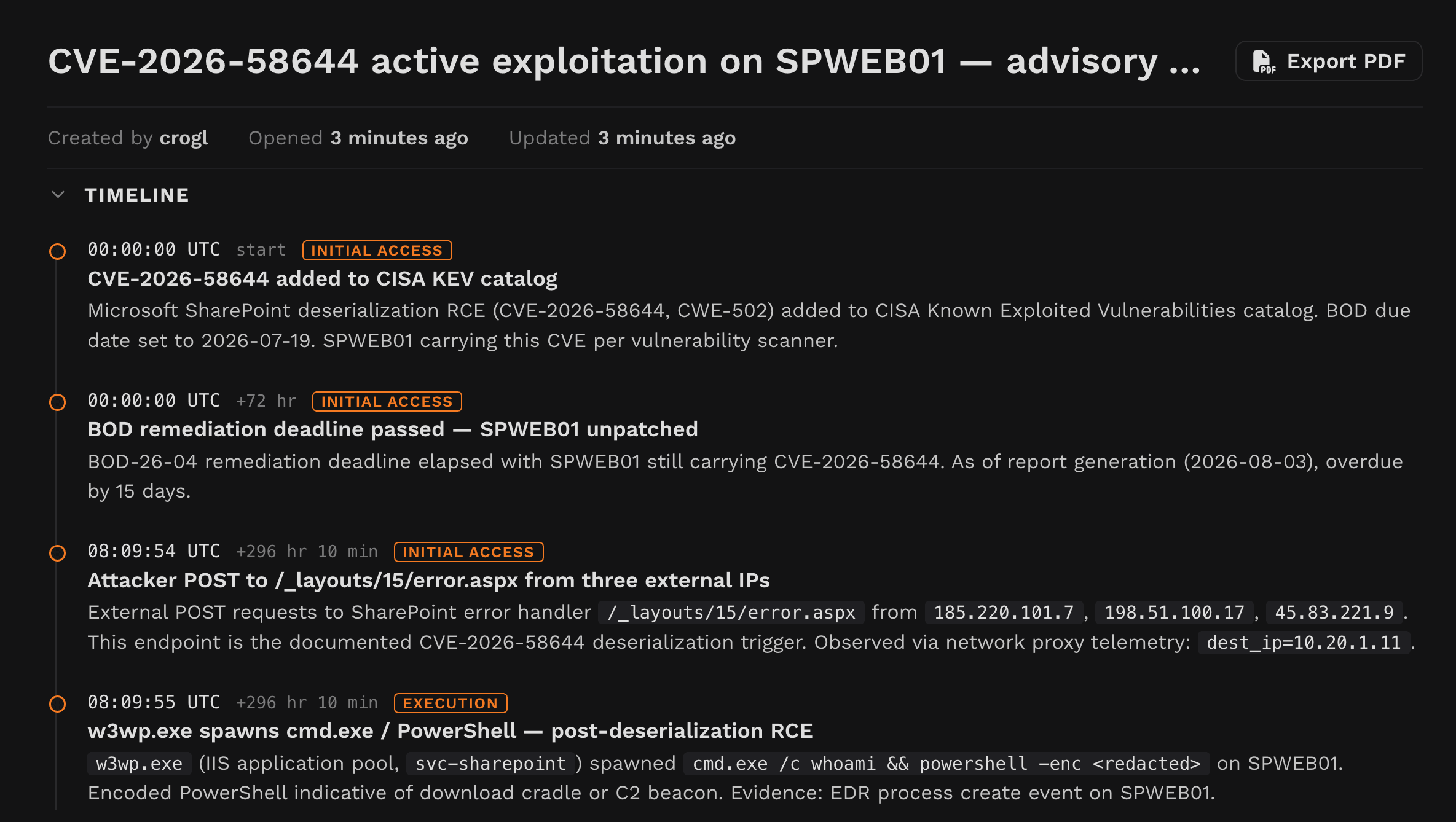
Crogl agents query your full data environment, including SIEMs, data lakes, EDRs, and cloud logs. Each query establishes whether the threat described in the advisory is present, has been present, or could be present in your infrastructure. Not a generic scan. A targeted investigation.
Complete Assessment Delivered to Your Team
Your analysts receive a complete advisory assessment: whether you're affected, what evidence was found, what the exposure is, and what actions are recommended. The investigation that used to take a day is done in under an hour.
In Production Today
Major US Electric Utility Company
< 1 hr
CRISP advisory analysis
Previously
24+ hours per CRISP report. Analysis limited to a single platform's data. Many advisories deferred or skipped entirely.
After
Every CRISP advisory investigated in under an hour. Full cross-source analysis. Complete documentation for regulatory requirements.
Operating in critical infrastructure where regulatory requirements mandate advisory investigation. Crogl ensures every advisory is fully analyzed against the organization's specific infrastructure, rather than acknowledged and filed.
What Crogl Delivers
Automated Advisory Intake
CRISP reports, ISAC advisories, vendor bulletins, CVE notifications. Crogl ingests and parses them automatically. No manual triage to determine which ones matter to your environment.
Environment-Specific Investigation
Every advisory is investigated against your specific infrastructure, not a generic risk score. Crogl queries your actual data sources to determine real exposure, not theoretical risk.
Historical and Current Analysis
Crogl does not stop at current state. It investigates historical data to determine whether the threat was present before the advisory was published, catching compromises that predate detection.
Regulatory-Ready Documentation
Each advisory assessment produces documentation that meets regulatory requirements for advisory response. When regulators ask whether you investigated a specific advisory, the evidence is already there.
Investigates Advisories Across Your Stack
“Every advisory. Your environment. Complete assessment.”
Investigate Every Advisory
How many of last month's advisories did your team fully investigate?
We'll show you how Crogl investigates every advisory against your specific infrastructure, in under an hour, with complete documentation.
Deployed in air-gapped federal environments, critical infrastructure, and Fortune 500 financial institutions.