AI SOC Analyst Augmentation: Why the Right Move Is Extension, Not Replacement
Mike Dupuis
Marketing, Crogl
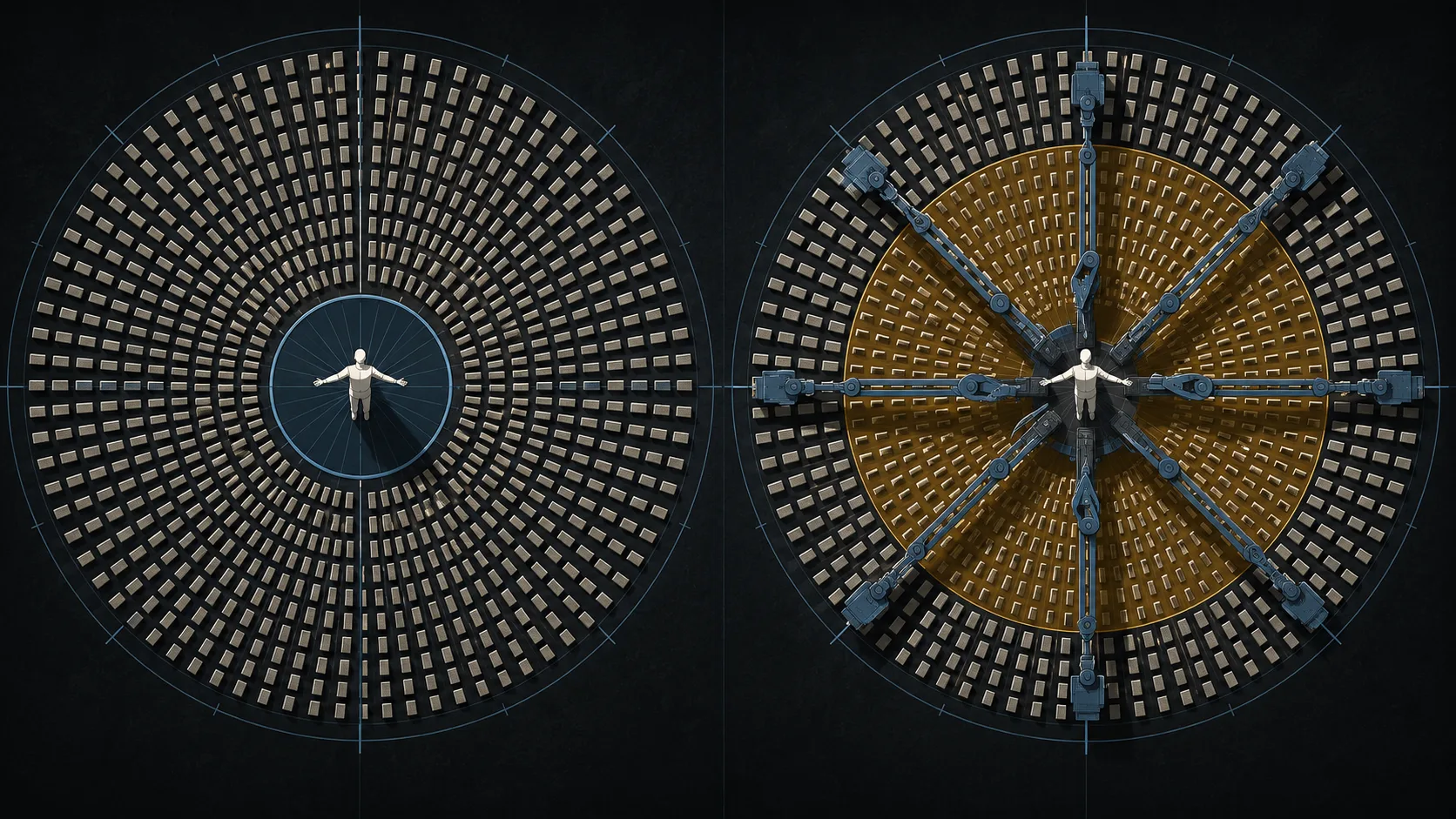
Too much of the AI SOC discussion focuses on whether AI will replace security analysts. That framing misses the actual problem. Security operations centers do not have too many analysts. They have too many alerts, too many disconnected systems, and too little time to investigate the work already in the queue.
AI should not sit in the analyst's chair. It should extend what the analyst can do.
The goal is not to remove the analyst. The goal is to give every analyst more reach.
Alert Fatigue Is a Throughput Problem
The queue is the problem.
The average organization faces roughly 4,330 alerts a day, and only 37% of them ever get investigated (2026 State of SecOps, independent research by Ponemon Institute, commissioned by Crogl). Effective alert triage doesn't happen when the queue is infinite. That means most alerts are never opened. They are not reviewed and dismissed. They are not triaged and closed. They are not investigated and documented.
They sit in the queue.
That is where the risk lives.
It is also where SOC analyst burnout starts. Analysts do not burn out because the mission does not matter. They burn out because the queue never ends. They spend too much of their time gathering data, pivoting between consoles, checking the same sources, rebuilding the same timelines, and trying to determine whether an alert deserves attention.
That is not the best use of their judgment.
Security teams hire skilled analysts to investigate, reason, and make decisions. Too often, those analysts spend their shifts acting as search engines across fragmented tools.
That is the work AI should take off their plate.
Replacing Analysts Does Not Fix the SOC
The replacement narrative starts from the wrong assumption.
It assumes the bottleneck is headcount. The bottleneck is investigative throughput.
If an organization cuts analysts while alert volume stays the same, the problem does not get better. The same queue gets handed to fewer people. Coverage shrinks. The backlog grows. Risk increases.
New evidence supports this. A June 2026 study by Ramp and Revelio Labs examined actual AI spending data across 21,559 U.S. firms and found that high-intensity AI adopters grew total headcount roughly 10% in the two years following adoption. Entry-level headcount rose 12%. Gains were broad across engineering, sales, administration, and customer service. The firms making the largest AI investments were hiring faster, not cutting.
The better question is not how many analysts can be removed. The better question is how much more each analyst can cover when the repetitive investigative work is handled for them.
That is where AI belongs in the SOC: around the analyst, not in place of the analyst.
Human-in-the-loop security is not a compromise. It is the right operating model for work that requires judgment, accountability, and context.
What Autonomous Alert Investigation Actually Looks Like
Augmentation should be specific.
It is not a dashboard. It is not a chatbot sitting beside a SIEM. It is not a generic assistant that waits for an analyst to know which question to ask.
The work that consumes the SOC is concrete. Pull the email metadata. Check the hash. Correlate endpoint telemetry with network logs. Look across identity, EDR, SIEM, SOAR, ticketing, and threat intelligence. Build the timeline. Document what happened. Show the evidence.
Most of that work is mechanical. Repetitive. Necessary. It consumes the shift.
The analyst should not have to do all of that manually before they can begin applying judgment.
The judgment is the human part. Is this malicious or benign? Is this the start of an intrusion or noise from a known pattern? Do we isolate the host? Do we watch? Do we escalate? Do we close?
That is where experience matters. That is where accountability lives. That is where the analyst stays in command.
AI should handle the investigative work so the analyst can spend more time on the calls that matter.
Why Human-in-the-Loop Security Matters
Security operations has a coverage problem.
The question should not be how many alerts a person can open in a shift. The question should be how many alerts a person can resolve with confidence when the investigation has already been assembled, documented, and tied back to source evidence.
That changes the unit of work.
The analyst is no longer spending the shift collecting fragments of context from five different tools. The analyst is reviewing a complete investigation, challenging the findings, applying judgment, and making a decision.
That is a better use of human expertise.
It is also a more honest answer to alert fatigue. You do not fix SOC analyst burnout by reducing headcount. You fix it by removing the source of the fatigue: the wall of alerts that require repetitive manual investigation before anyone can determine whether they matter.
How Crogl Approaches Autonomous Alert Investigation
Crogl was built for autonomous alert investigation.
It investigates alerts, documents actions, and returns findings with the evidence attached. The analyst stays in command.
In headless mode, Crogl picks up tickets, runs investigations across connected systems, documents false positives, and escalates real threats with evidence packages.
In workbench mode, the analyst drives. They can ask questions in natural language, build context, and investigate without spending the shift jumping between consoles.
Every query, inference, and determination is logged and traceable to source data.
Security teams do not need magic. They need systems they can trust, examine, challenge, and operate inside their own environment.
Auditable. Repeatable. Inspectable.
That is what operationally relevant AI looks like in the SOC.
The Proof Is Throughput
The value of AI in the SOC should be measured in throughput, not promises.
At a Fortune 500 financial services institution, Crogl delivered more than 70% reduction in analyst triage time, with automated triage directly into the case management system. The analysts did not disappear. The work they were doing manually did.
At a major US electric utility operating with a lean SOC team, Crogl produced a 75% reduction in analyst time per alert and tripled investigation throughput. CRISP advisory analysis dropped from more than 24 hours to under an hour. The team did not grow to hit those numbers. The reach of each analyst did.
The Ramp/Revelio data points in the same direction at scale: organizations that commit to AI deeply grow their teams. The firms that run pilots and walk away see nothing. The threshold matters. The investment matters. The integration into how the work actually gets done matters.
The Bottom Line
The SOC crisis is not an excess of skilled people.
It is an excess of alerts colliding with a fixed number of hours.
Replacing analysts does not solve that problem. Augmenting them does.
Crogl gives analysts more reach, more context, and more investigative coverage without taking them out of command.
The future of AI in the SOC is not fewer analysts. It is analysts who can cover more ground.
Sources: Ponemon Institute, State of SecOps 2026; Kharazian, Simon, and Stevens, "A New Look at AI's Impact on Jobs: Firm-Level AI Spending and Workforce Adjustment," Ramp and Revelio Labs, June 2026.
Frequently asked questions
Should AI replace security analysts in the SOC?
No. The SOC's bottleneck isn't headcount, it's investigative throughput: too many alerts and too little time, not too many analysts. A June 2026 Ramp and Revelio Labs study of actual AI spending data across 21,559 U.S. firms found high-intensity AI adopters grew total headcount roughly 10% (entry-level headcount up 12%) in the two years after adoption. The firms making the largest AI investments were hiring faster, not cutting.
What causes SOC analyst burnout?
Burnout comes from an alert queue that never ends, not from the mission itself. Analysts spend the bulk of their shift gathering data, pivoting between consoles, rebuilding timelines, and determining whether an alert deserves attention: repetitive work that consumes their time before judgment is ever applied. Fixing burnout means removing that investigative burden, not reducing headcount.
What does human-in-the-loop mean in AI-driven security operations?
It means AI handles the mechanical, repetitive investigative work (pulling telemetry, correlating logs across EDR, SIEM, identity, and ticketing systems, building timelines) while the analyst keeps the judgment calls: is this malicious, do we isolate the host, do we escalate. The analyst stays in command; AI extends their reach rather than replacing their decision-making.
How much difference can AI-driven alert investigation make to SOC throughput?
At a Fortune 500 financial services institution, Crogl cut analyst triage time by more than 70% with automated triage directly into the case management system. At a major US electric utility running a lean SOC team, Crogl reduced analyst time per alert by 75% and tripled investigation throughput without growing the team.