Do Your Agents Know Your Secrets?
Lipyeow Lim
Distinguished Engineer and Head of AI, Crogl
Dominic Salas
Sr. Security Engineer, Crogl
Your AI SOC agent just disabled a compromised account, queried your SIEM, and rotated an API key.
Impressive.
But here's the uncomfortable question: where did it get the credentials to do that?
The Hidden Cost of Autonomous Agents
We've moved quickly from chatbots to agents: systems that don't just answer questions, but take action. In security operations, that means querying internal systems (SIEM, EDR, IAM), triggering workflows, isolating endpoints, and rotating credentials.
But autonomy comes with a requirement: agents need access. And access requires secrets.
API tokens. OAuth credentials. Service accounts. Keys to critical infrastructure.
At that point, every useful agent becomes something more than an assistant. It becomes a secrets-handling system.
Where Things Get Risky
In many architectures, these agents rely on third-party LLM providers. That creates a subtle, but critical, problem: secrets often cross the enterprise trust boundary.
They can end up embedded in prompts, passed into tool calls, stored in logs or traces, or retained in external systems. Even when handled carefully, the architecture itself introduces risk, and that risk maps directly to well-known failure modes.
This Isn't Theoretical: It Maps to OWASP Risks
Modern agentic systems align closely with emerging OWASP concerns.
Sensitive Data Exposure. Secrets can leak through prompts, tool inputs, or logs, especially when external services are involved.
Prompt Injection and Data Exfiltration. Malicious inputs can manipulate agents into revealing sensitive data, triggering unintended actions, or querying internal systems.
Excessive Agency. Agents are often over-privileged, with broad API access, persistent credentials, and limited scoping.
Insecure Tooling. APIs exposed as tools become attack surfaces through weak validation, unintended execution paths, and hallucinated actions.
A Step Forward: MCP and Structured Tooling
Protocols like MCP (Model Context Protocol) are a meaningful improvement. They keep secrets out of prompts, centralize credential handling, and allow agents to call tools without directly accessing secrets. This is a big step forward.
But it also changes the problem.
The Risk Moves: From Exposure to Invocation
With MCP-style architectures, the model doesn't see the secret. But it can still trigger actions that use it. That's not a flaw; it's inherent to any agent system. The question becomes: not "who can see the secret?" but "who can trigger its use?"
At that point, security depends on how tools are scoped, how permissions are enforced, and how actions are governed. In other words, security becomes a control and policy problem.
And Then There's the Human Factor
Of course, a user can always paste a secret into a prompt. No architecture can fully prevent that. But that's a different class of problem.
The distinction matters: user-driven disclosure is largely unavoidable. System-required exposure is not. The real issue is whether your system requires secrets to flow through the model in order to function. Many do.
A Better Model: Separation by Design
The safer approach is not to rely on the LLM to "handle secrets correctly." It's to ensure the LLM never has access to them in the first place.
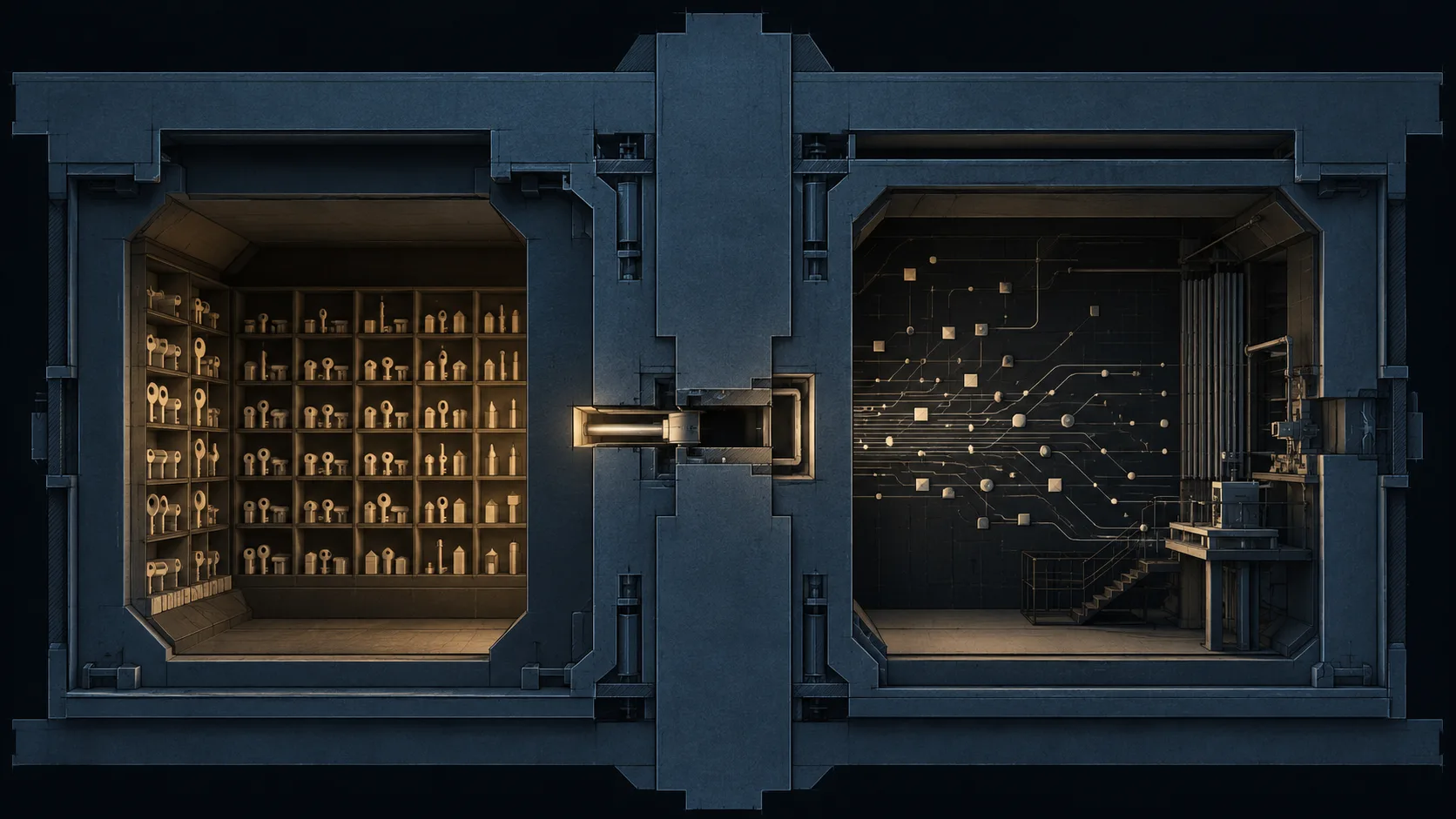
This requires a strict separation: the LLM decides what should happen, and a controlled system decides how it happens. No credentials. No tokens. No secrets in the model context.
Crogl's Approach: Agents Without Secrets
Crogl builds on modern agent architectures like MCP, but enforces stronger guarantees around isolation and control.
Secrets are fully isolated. They're encrypted at rest and in transit, never exposed to the agent, and never included in prompts, tool payloads, or memory. Agents in Crogl are structurally incapable of accessing secrets.
Execution is controlled, not delegated. The agent determines intent. The Crogl platform executes actions. Credentials are applied only within a controlled execution layer. The LLM decides intent; Crogl enforces execution.
Access is governed by role-based controls. Agents operate with least-privilege tokens. Role-based access controls scope what actions are allowed. User data is isolated. Agents only act within their caller's context.
This doesn't eliminate all risks, but it ensures actions are bounded, access is intentional, and behavior is governable.
Related reading: Governed auto-remediation, on how that execution layer gates SOAR actions on evidence before anything runs.
What This Actually Solves
No system can eliminate all risks in autonomous workflows. Crogl doesn't claim to. But architecture still matters.
Crogl removes an entire class of risk: no secrets in prompts, no secrets in LLM context, no secrets leaving the enterprise boundary, no programmatic access to credentials by the agent. What remains, like tool misuse or user error, is addressed through policy, permissions, governance, and a full audit trail where every agent action is logged and attributable. Where it belongs.
Rethinking "Autonomous"
Autonomy shouldn't mean "agents with full access to everything." It should mean "agents operating through controlled, secure capabilities."
Final Thought
If your agents need to know your secrets, that's a design choice. If your users tell them anyway, that's a different problem.
But the safest architecture is still the simplest: the safest secret is the one your agent never sees.
Frequently asked questions
What is the hidden cost of autonomous AI agents in security operations?
Autonomous agents require secrets (API tokens, OAuth credentials, service accounts) to act on systems like SIEM, EDR, and IAM. Every useful agent becomes a secrets-handling system, creating new risks when those credentials cross enterprise trust boundaries. Secrets can end up in prompts, tool calls, logs, or traces. Crogl isolates secrets so they never enter prompts or model context.
What OWASP risks apply to agentic AI systems?
Modern agentic systems map to four key OWASP risks: Sensitive Data Exposure (secrets leaking through prompts or logs), Prompt Injection and Data Exfiltration (malicious inputs triggering unintended actions), Excessive Agency (over-privileged agents with broad persistent access), and Insecure Tooling (APIs exposed as tools with weak validation).
How does MCP reduce secrets exposure in AI agent architectures?
MCP (Model Context Protocol) keeps secrets out of prompts, centralizes credential handling, and lets agents invoke tools without directly accessing credentials. However, it shifts the risk from exposure to invocation: the model still triggers actions that use secrets, making scoping and permissions the new security frontier.
What is the safest architecture for AI agents that interact with sensitive systems?
Strict separation of intent and execution: the LLM decides what should happen, and a controlled platform layer executes it, applying credentials only within an isolated execution environment. No secrets should ever appear in the model context, prompts, tool payloads, or memory.